Portami
il futuro
Perché Portami il futuro?
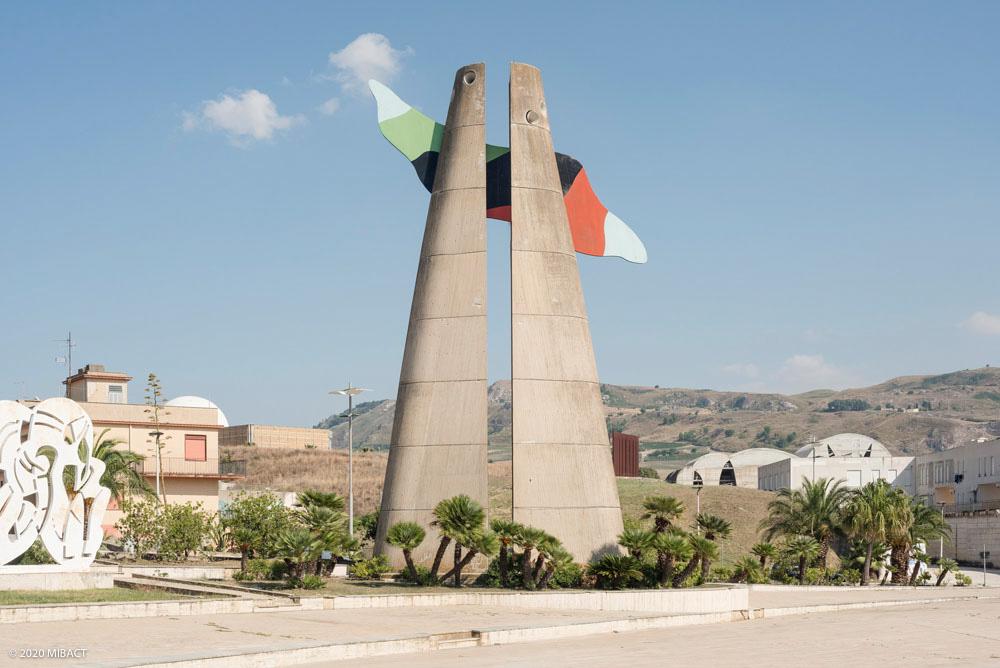
Perché Gibellina, prima città italiana proclamata dal Ministero della Cultura Capitale Italiana dell’Arte Contemporanea, per tutto il 2026 sarà abitata da una visione di futuro che mette al centro bellezza, arte e cultura come valori condivisi e rigeneranti.
Esempio unico a livello nazionale e internazionale di città rinata dalle ceneri del terremoto attraverso l’arte, Gibellina attiverà nelle sue strade, piazze, luoghi simbolici, ma anche su tutto il territorio del Belice e di Trapani, un progetto corale, un’opportunità per tutto il Paese di riflettere sul ruolo della cultura come valore fondante del vivere civile.
The designation of Gibellina is also an opportunity for Sicily as a whole, not only to act as a spokesperson for a strategic sector for Italy’s image in the world, but also to serve as a catalyst for a Mediterranean culture attentive to the value of the individual and of the community, as demonstrated by the active involvement of citizens promoted throughout the entire program.
Gibellina, Italian Capital of Contemporary Art 2026 takes us into a future that is possible for everyone.
Performing
Arts
Between theater and artistic performances, cinema and music, the performing arts will inhabit the city’s and the surrounding area’s historic and iconic places, engaging audiences with urgent social issues, inviting them to embrace hospitality and dialogue between cultures, blending visual and sound dramaturgies, with a constant focus on returning spaces to a community that grows through art. Among the protagonists are national and international artists, site-specific interventions, and programs that weave together cinema, music, and contemporary art.
Exhibitions
The exhibition projects for the city, the municipalities of the Belìce area, and the Trapani tourism district have been conceived to preserve the memory of places and to reinterpret the present starting from the traces that contemporary art has left there. Works by national and international artists will activate iconic sites, restoring historical experiences and revealing the artistic vitality of the territory through 18 exhibitions which—by inhabiting city museums and reactivating, through redevelopment interventions, spaces once devoted to the enjoyment of contemporary art—will give rise to a widespread exhibition system, both indoor and outdoor, unique in its beauty.
Residencies
Building art and building community: the residency program designed for Gibellina moves between these two poles, and includes participation and regeneration projects developed through encounters among artists, young people, and the local community, within a process of mutual learning that invites presence, respect for others, attentive listening to places and to those who inhabit them, conviviality, and interaction with the unexpected and the unfamiliar. Collective practices will give shape to new site-specific works and urban and social interventions, fostering opportunities for encounter among residents, migrants, artists, researchers, and local and international students.
Education & Participation
One of the cornerstones of the entire program lies in the active involvement of the local community. This section is dedicated to workshops, training activities, and intergenerational projects conceived with the aim of transforming the experience of the Capital into a shared exercise in cultural citizenship. Through the involvement of contemporary artists and local artisans, as well as the creation of podcasts and art education pathways for all kinds of audiences, memories that might otherwise be lost are recovered and shared—those very memories that today become a driving force for new participation.
Symposia,
conferences and civic workshops
In collaboration with research institutes, academies, and universities, Gibellina becomes a center for debate on contemporaneity; as the home of a National Advisory Committee on Contemporary Art, it will be a place for sharing the main issues of Italian contemporary art. Through widespread artistic projects, symposia and critical reflections, meetings, and conferences, the role of art in urban regeneration processes will be explored in depth, presenting the city as a model. By engaging experts, curators, architects, and artists, Gibellina will strengthen its identity as an “open laboratory,” promoting art tourism, stimulating local creativity, and engaging in dialogue with new technologies.
Performing
Arts
Between theater and artistic performances, cinema and music, the performing arts will inhabit the city’s and the surrounding area’s historic and iconic places, engaging audiences with urgent social issues, inviting them to embrace hospitality and dialogue between cultures, blending visual and sound dramaturgies, with a constant focus on returning spaces to a community that grows through art. Among the protagonists are national and international artists, site-specific interventions, and programs that weave together cinema, music, and contemporary art.
Exhibitions
The exhibition projects for the city, the municipalities of the Belìce area, and the Trapani tourism district have been conceived to preserve the memory of places and to reinterpret the present starting from the traces that contemporary art has left there. Works by national and international artists will activate iconic sites, restoring historical experiences and revealing the artistic vitality of the territory through 18 exhibitions which—by inhabiting city museums and reactivating, through redevelopment interventions, spaces once devoted to the enjoyment of contemporary art—will give rise to a widespread exhibition system, both indoor and outdoor, unique in its beauty.
Residencies
Building art and building community: the residency program designed for Gibellina moves between these two poles, and includes participation and regeneration projects developed through encounters among artists, young people, and the local community, within a process of mutual learning that invites presence, respect for others, attentive listening to places and to those who inhabit them, conviviality, and interaction with the unexpected and the unfamiliar. Collective practices will give shape to new site-specific works and urban and social interventions, fostering opportunities for encounter among residents, migrants, artists, researchers, and local and international students.
Education & Participation
One of the cornerstones of the entire program lies in the active involvement of the local community. This section is dedicated to workshops, training activities, and intergenerational projects conceived with the aim of transforming the experience of the Capital into a shared exercise in cultural citizenship. Through the involvement of contemporary artists and local artisans, as well as the creation of podcasts and art education pathways for all kinds of audiences, memories that might otherwise be lost are recovered and shared—those very memories that today become a driving force for new participation.
Symposia,
conferences and civic workshops
In collaboration with research institutes, academies, and universities, Gibellina becomes a center for debate on contemporaneity; as the home of a National Advisory Committee on Contemporary Art, it will be a place for sharing the main issues of Italian contemporary art. Through widespread artistic projects, symposia and critical reflections, meetings, and conferences, the role of art in urban regeneration processes will be explored in depth, presenting the city as a model. By engaging experts, curators, architects, and artists, Gibellina will strengthen its identity as an “open laboratory,” promoting art tourism, stimulating local creativity, and engaging in dialogue with new technologies.
Events
Press Kit
Office Press
Office Press Gibellina – Capitale Italiana dell’Arte Contemporanea 2026
Lara Facco P&C – Milan
+39 02 36565133
Subscribe to the newsletter to stay up
to date
with all
our events